MRVT 25 Years (1992-2017)

The Battles for Conygre Mead
Lesley Bennett
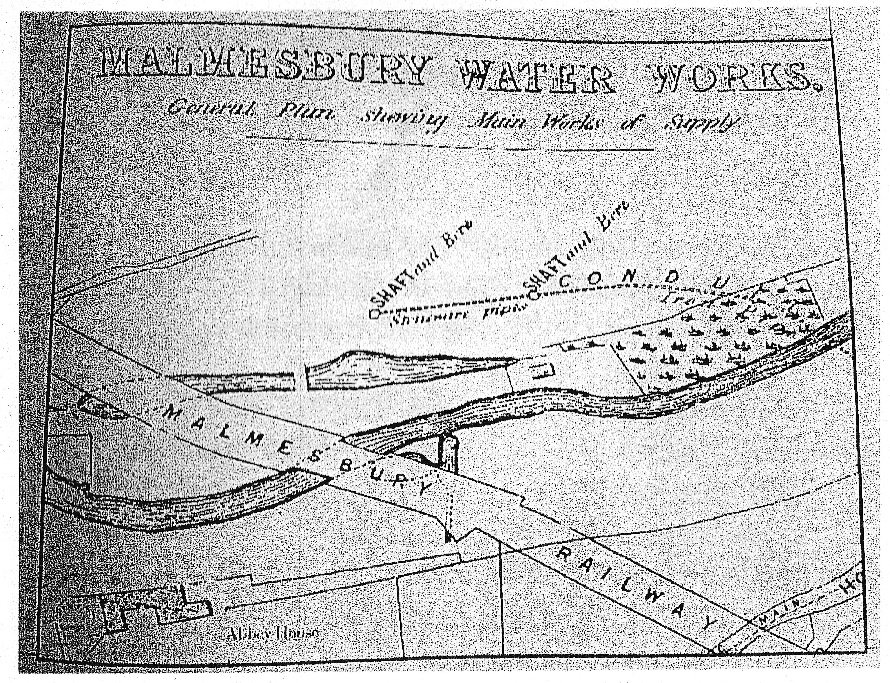
Conygre Mead belonged to the Abbey in the Middle Ages and was used, as its name suggests, as a place for breeding rabbits (coneys). It was acquired by the Malmesbury Waterworks Company in 1864. They installed a bore hole and a pumped water for the town up to the Water Tower by the Abbey. In the 1870s the Great Western Railways built the Malmesbury line across part of the Mead. The Waterworks were not needed by the end of the century and in 1902 the Malmesbury Borough Council bought the land. They added the old Railway line and its land to the south in 1967.
How times change. The Malmesbury Borough Council thought of the land as redundant industrial land and for years in the middle of the twentieth century used it as the town refuse tip. As it turned out, this was an excellent way to save the Mead from development. In 1970, the Borough Council applied for planning permission to use Conygre Mead for residential development.
Wiltshire County Council (then the planning authority) refused permission and the Borough Council appealed against this and won. They sold 4.7 acres to a Mr Iles of Lime Tree Developments with conditions that he should build a road on the southern boundary and not more than 11 houses. (The local council retained ownership of the riverside strip.)
Nothing happened and the planning permission lapsed- probably because it was difficult to resolve the problems of building on a tip which leaked methane and contained unpleasant contaminants.
Local Government was reorganised. The Borough Council became a Town Council, North Wiltshire District Council was born (taking over ownership of the strip of land beside the river though Conygre Mead) and became the local planning authority. Its first Local Plan put the Mead outside the protected area of the town and set it up as potential development area. More applications were made in 1977, 1978 and 1979. The 1979 application for 14 dwellings and garages was granted but not taken up. It expired 3 years later and in in June 1984 a planning application for 34 dwellings with garages and a road was submitted. But Malmesbury was ready by then. There was huge local opposition and it was refused for three reasons: the building of a scheme of this density in large part on former tip land where there is evidence of potentially toxic and hazardous material is inappropriate and unacceptable….., because it would affect the pleasant riverside environment and..... because no satisfactory arrangements had been made to link into the existing road system.
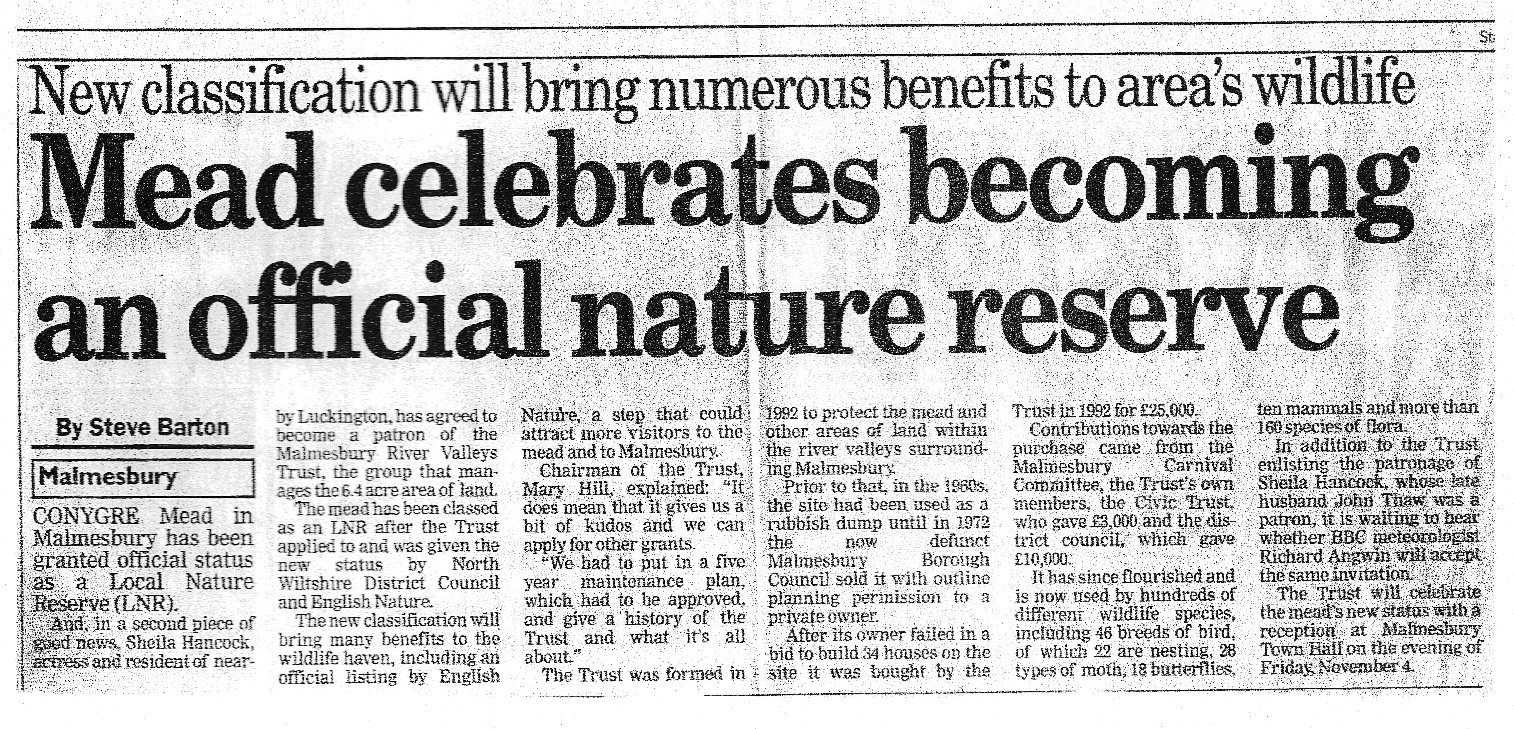
By the time the next planning application was submitted in 1987 we were ready for it. We had suggested and supported proposals for a new Local Plan which said that "development will not normally be permitted along the river banks and adjoining open areas in Chippenham, Calne and Malmesbury" and that “Land at Conygre Mead Malmesbury is proposed as Public Open Space" - Hurrah - primary protection in planning law. We were ready for a fight.
The application went to Appeal and we had a public enquiry in Malmesbury that must have convinced the Planning Inspector that there were good reasons to refuse the housing as well as local will to set Conygre Mead up as Public Open Space and a Nature Reserve instead.
It must have been clear to Lime Tree Developments that they would be throwing money away submitting any more planning applications. We needed to find a way buy the Mead ourselves.
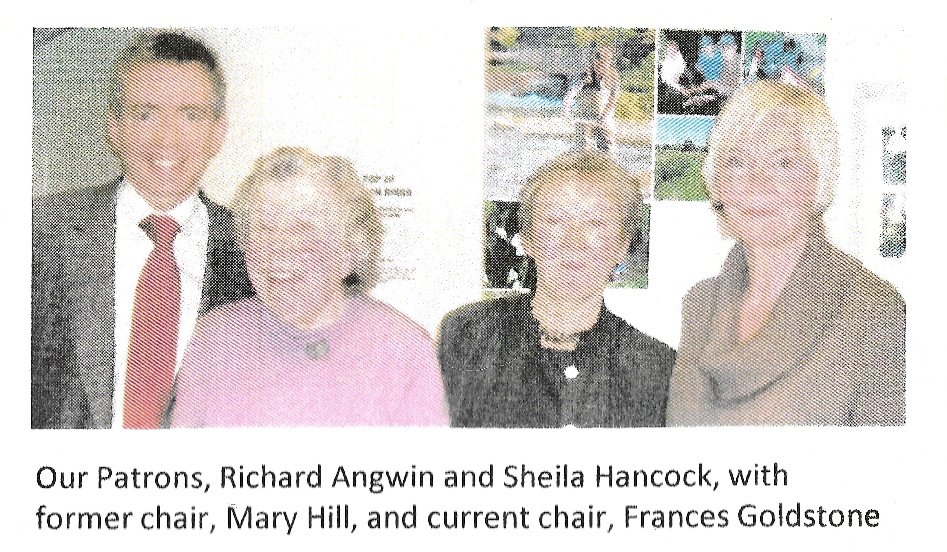
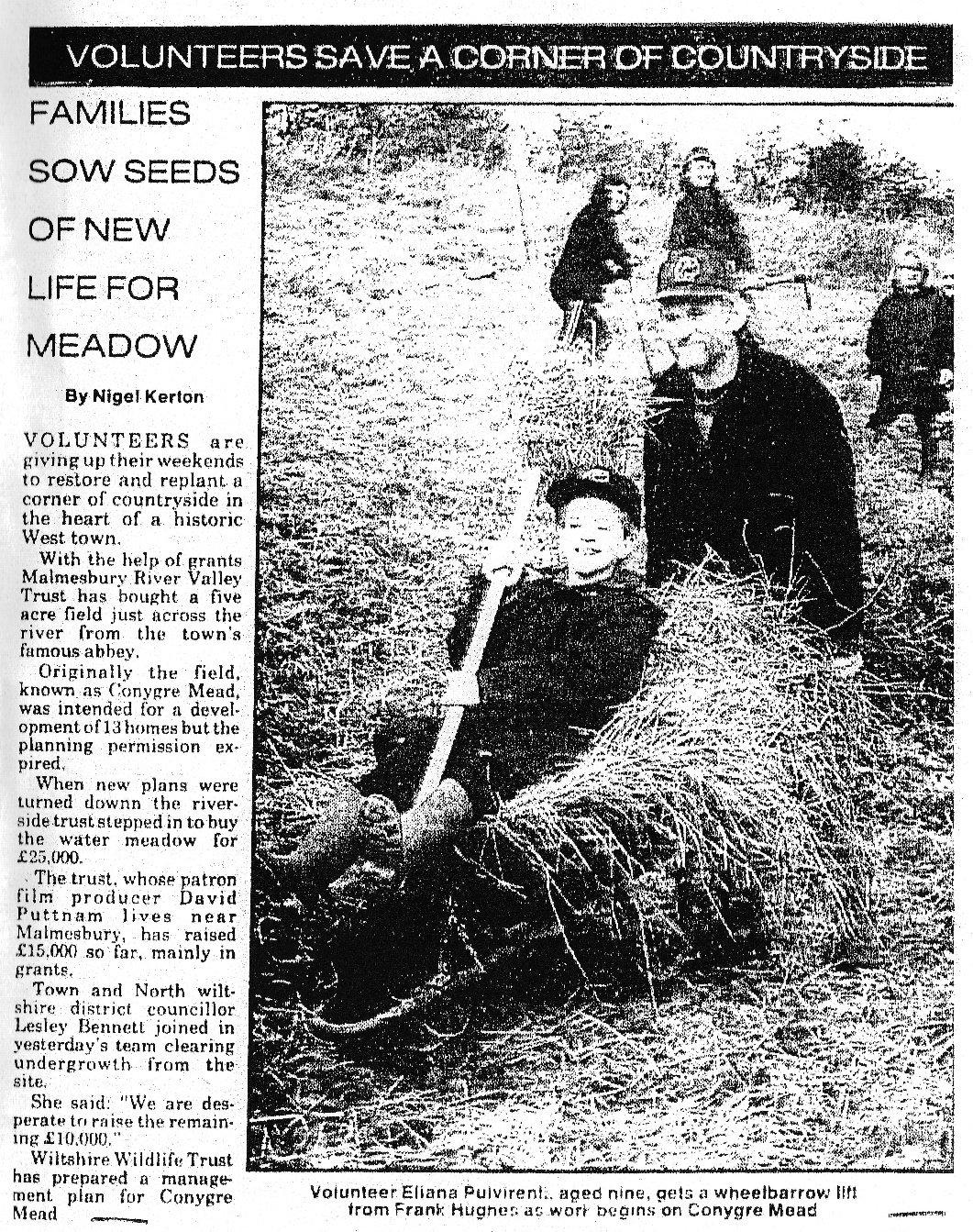
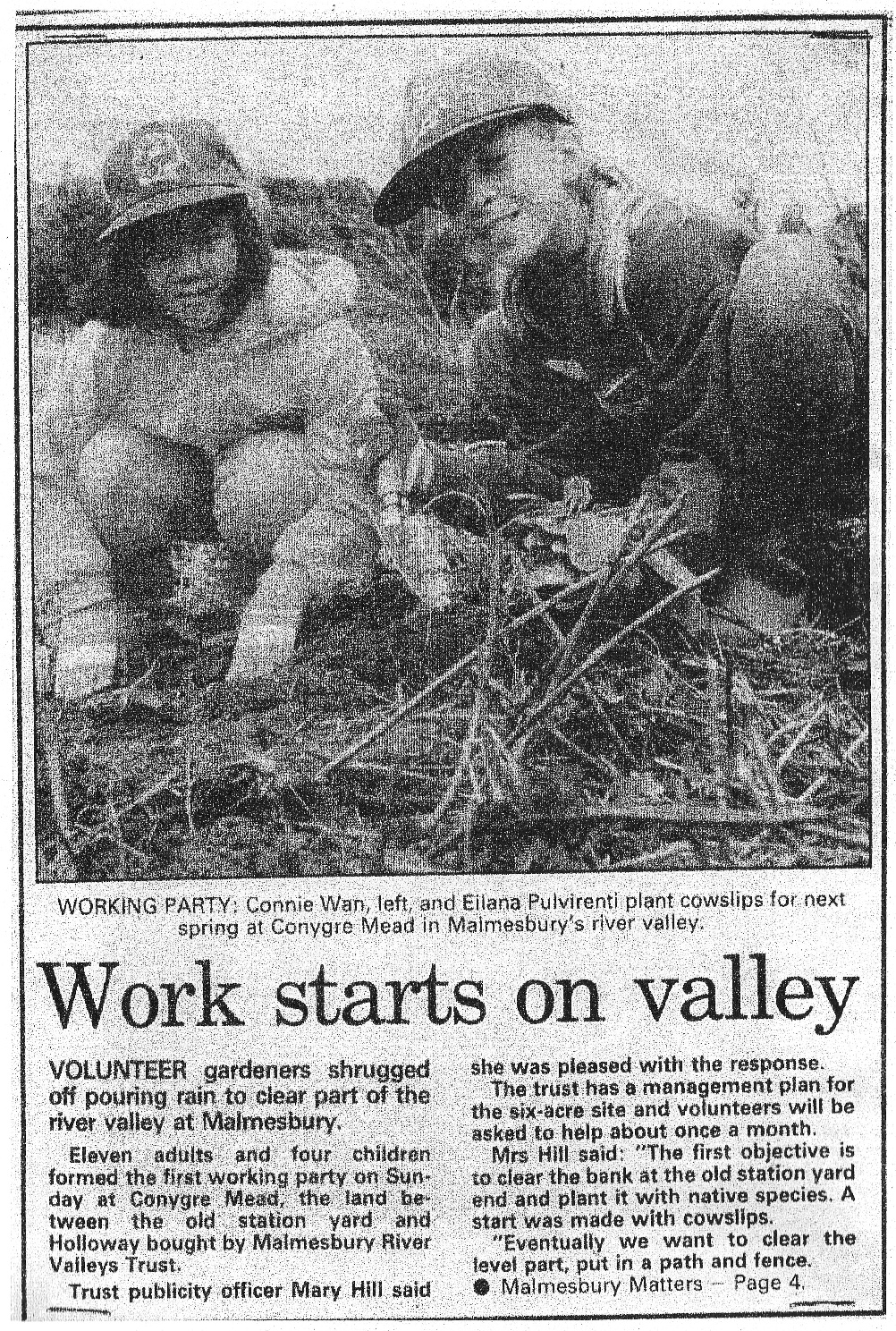
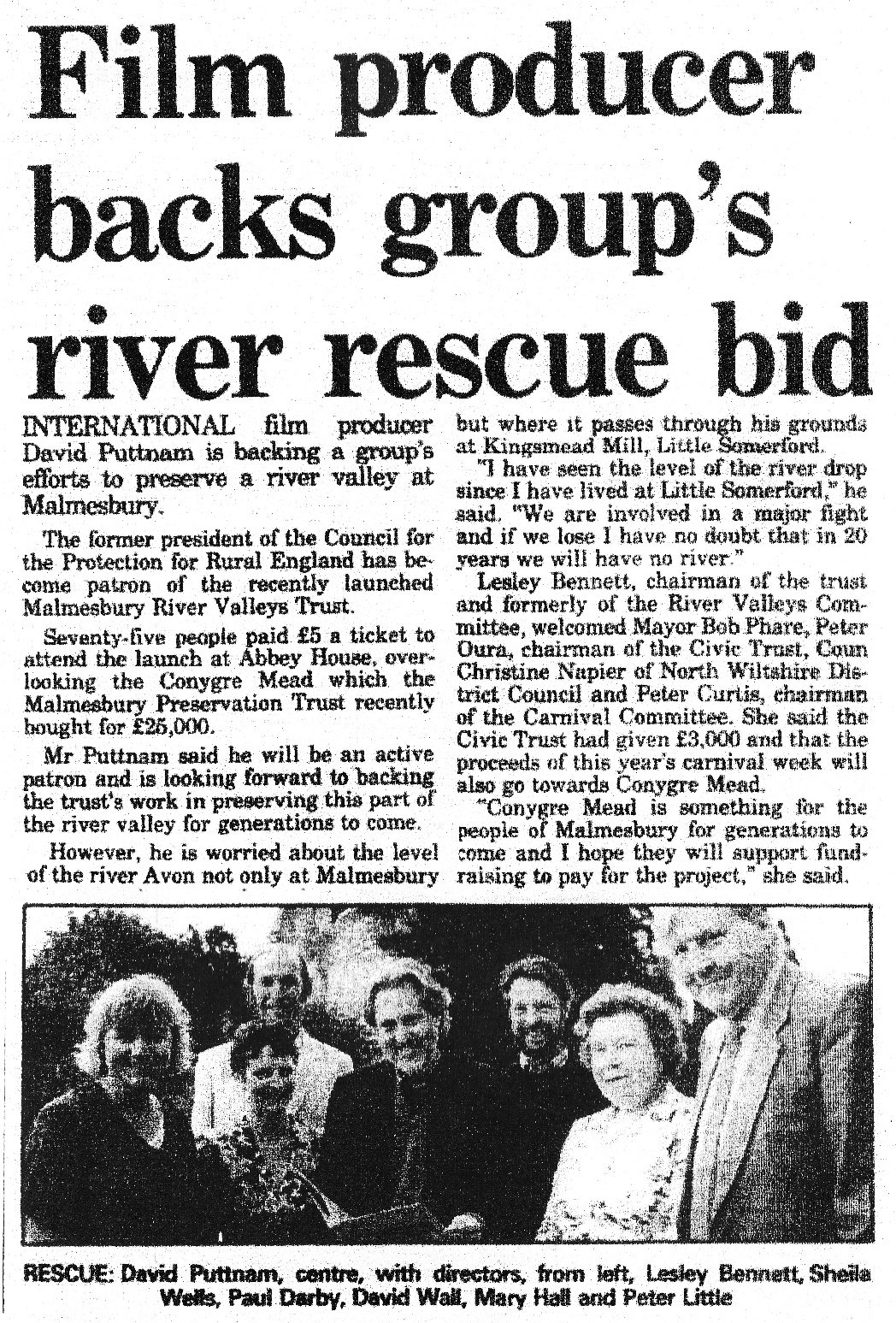
As mayor of Malmesbury in 1989-90 I was able to work with Christine Napier on the District Council and we convinced them not only to give us the land they owned but also to give us a grant of £I0,000 towards its purchase price. We set up a joint committee: The Malmesbury River Valleys Committee, and set about the task of negotiating with the landowner, setting up a formal Trust, raising money and producing a land management plan which would justify the investments. We had many good friends; we engaged solicitors who worked pro bono, the Carnival Committee, English Nature and the Wildlife Trust, Sheila Hancock and John Thaw supported us (of course at the time John was working on Inspector Morse with James Grout - the husband of Noreen on our committee). We managed to get grants from the Wessex Watermark Scheme and the Rotary Club helped organise some improvement to our paths. People sponsored trees and we sold goods at Petticoat Lane and St Aldhelm's Fair. We launched with our VIP friends at Abbey House - then owned by the Malmesbury Preservation Trust, and held a fund-raising dinner at the Smoking Dog. The Carnival Committee gave us generous support. And at the same time our Land Management Team were working on a 5-year plan for improving and restoring the land.
It all worked beautifully. We quickly acquired supportive members and in January 1993 we were able to announce that we had formally achieved Charitable status as a company limited by guarantee.
We bought the Mead for £25,000, secured a loan from the Midland Bank to top up the £I0,000 from the NWDC and cleared our debt completely within 2 years.
We all came together - the Residents Association, the Civic Trust, the Biological Recording Group of Wiltshire Wildlife Trust, together with the Town Council and NWDC to do what we could to save Conygre Mead for development and make a place for the people of the town to enjoy as a wildlife haven. It was a wonderful experience working with Paul Darby, Noreen Grout, Mary Hill, Peter Howell, David Wall, Frank Hughes Betsy and Peter Little, Paddy Lockstone and Jeff and Sheila Wells who became the founding trustees of the Malmesbury River Valleys Trust. And it was wonderful to feel wide enthusiasm from the people of Malmesbury. It worked because we did it together.
 Our Logo
Ceri Pulvirenti
I imagine that most of our current members, when they see the logo, assume that my Mother, the art teacher, designed it. That is not the case. I'm the guilty party!
As part of the launch of MRVT, the then Trustees held a competition to design the logo, with a prize of £50 for the winning entry. I had just left my first husband in Italy and returned to the UK with two pre-school age children, a suitcase of their summer clothes and all of £15 in my pocket. No sooner had I had heard about the competition than out came the pen and paper! I must emphasise here that all the entries were anonymous and that my Mother abstained from the vote because she knew which design was mine.
Had I had any source of income at the time I would have returned the prize money to the Trust but, as it was, it bought the children's winter wardrobe in the local charity shops!
Mead Memories
Paul Darby & David Witt
It was as if the town suddenly woke up in 1987 when the planning application for 23 houses on the Mead was submitted. The fact that it could be built on seemed unthinkable, and moved a number of people to action. Many people in Malmesbury valued it as a green open space. They may have been walking through for years, looking down on it from the town, or just knew it was there: Peter Riggs, for instance, who worked as a grave-digger at Malmesbury cemetery, was an ex-poacher, turned wildlife photographer, who knew a lot about the wildlife on the Mead. He passed on to us a handwritten list of what he had seen there, which included adder!
The local Biological Recording Group, of which we were part, was involved in gathering together the wildlife records. One evening the two of us met at my house to discuss strategy for the Public Enquiry which Paul was to attend. We felt that it would be best not simply to oppose housing development on the Mead but to put forward an alternative plan. We pencilled in a few features, including a pond, on a map of the Mead and the idea of a Nature Reserve was born.
The awareness-raising continued, talking, lobbying, and so on...
Probably the majority of folk in Malmesbury (bar the Bowls Club, who would have quite liked new premises there) were against proposals for housing. These views were communicated to North Wilts District Council (as was) and they took a stance against the development. David Auld was their officer and he was very sympathetic to our cause. They wanted to declare it as Public Open Space, and still owned the strip of land adjacent to the river, which was already the river walk path.
The Public Inquiry in August 1988 in Malmesbury Town Hall came about as an appeal was made to the Secretary of State by Land Research Ltd. on the grounds of non-determination by NWDC of this new planning application within the allocated time.
Paul takes up the story: -
“This Inquiry was quite a scary affair (for me), with a wily and experienced man putting the case for the developers we were just a bunch of concerned but passionate amateur locals … !
Some of us were allowed to speak and make our case .. I remember Dick Holbrook (what a lovely man! He lived with his wife, Kathleen, just up Lover's Lane), speaking passionately.
I also spoke, presenting the case for wildlife, as I was chairman of the local supporter group of The Wiltshire Trust for Nature Conservation (now Wiltshire Wildlife Trust). I remember being cross-examined by their man. I had been warned not to overstate the wildlife case, but stick carefully to the facts, otherwise he would have 'drawn me out', and then cut off my means of retreat and destroyed my case and credibility. I was therefore very careful.
I remember after the Public Inquiry, waiting for the Inspectors decision, that uncertainty... the long wait ... In the end, his decision came down against the developers, mainly due to... ‘the likely effects on the character and appearance of the area' i.e. on landscape grounds, the setting of the Mead with regard to the Abbey, Abbey House, the River, historic Malmesbury.
I remember feeling a great sense of relief, and some jubilation as well!
There was no appeal against this decision, so we had won the day, but the Mead was still owned by the developers".
Hence began the next stage of the saga, since many of us now felt that there was a real opportunity to acquire the land as a Nature Reserve with full public access.
Thus, the Malmesbury River Valleys Committee was formed from members of the Biological Recording Group (Betsy and Peter Little and ourselves, and others with useful local contacts, including Mary Hill, Lesley Bennett and Noreen Grout.
Letters of support were sent, from Malmesbury School, The Town Council, The Cartmell (Youth) Centre, and Wiltshire Trust for Nature Conservation central office. Offers of financial support came from several directions with a large grant from North Wilts. council and valuable sums from local organisations, such as the Civic Trust, as well as individuals.
Malmesbury River Valleys Trust was formed and became a charity. Lesley Bennett did much of the hard work setting up its charitable status.
When we had finally managed to buy the Mead, there was a real sense that the power and persistence of the local people had prevailed against the bigger odds.
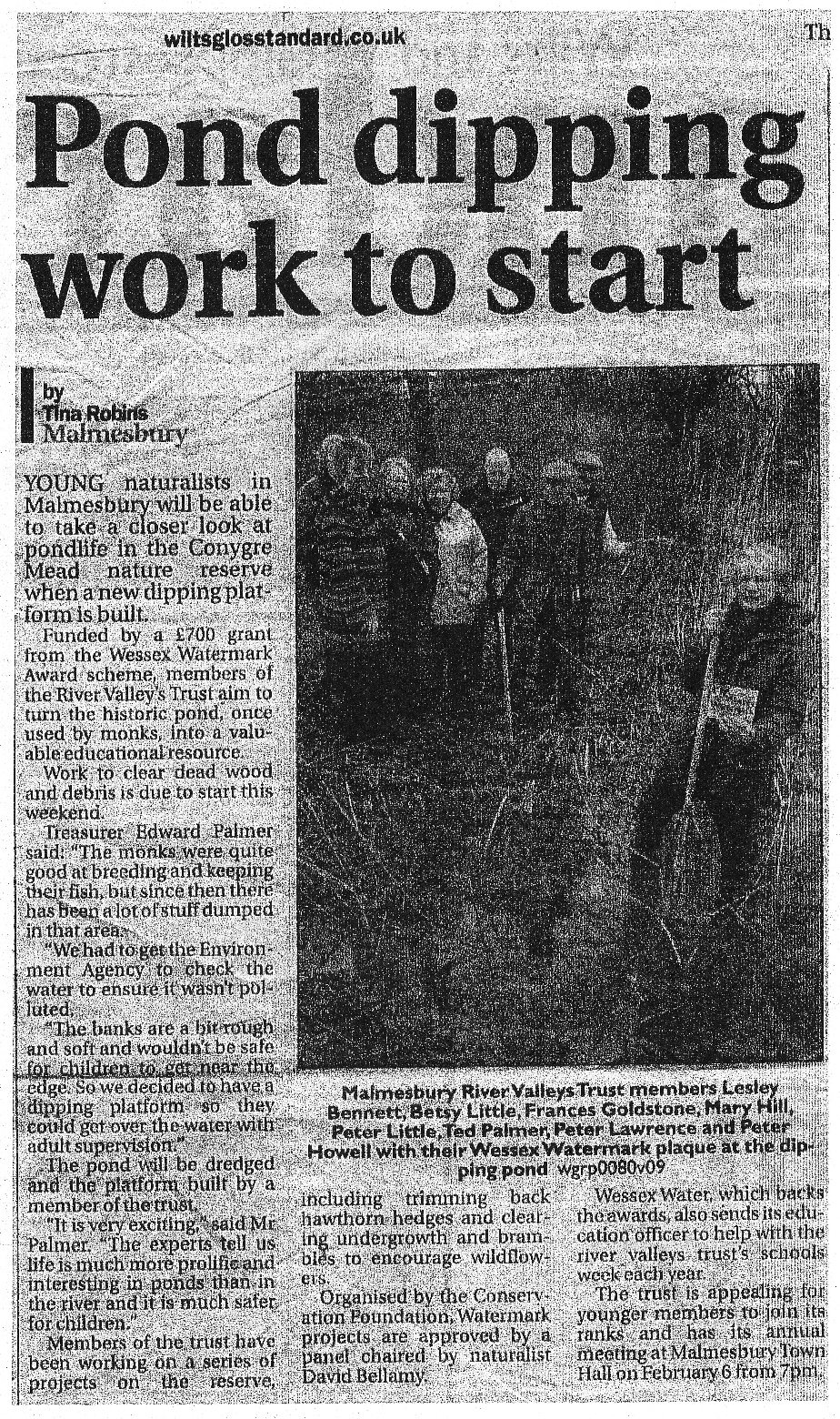
John Bowen drew our attention to a 1843 map of the Mead area, which shows the side channels and ponds which were the remnants of the Monks’ carp ponds and feeder streams. The pond which was excavated once we had taken possession of the Mead restores a little bit of the fascinating history of the Mead.
Malmesbury River Valleys Trust
The first 25 years and counting...
Mary Hill
Malmesbury River Valleys Trust is 25 years old this year and when, as one of its long serving members, I agreed to look back over that time for this newsletter I realised that it would be a lengthy but most interesting task. My first thought was to ask others who like me were there at the beginning for their memories. This brought very detailed and interesting descriptions form Lesley Bennett, David Wall and Paul Darby both of which make an excellent starting point around which to build our reminiscences.
A search in my attic also resulted in a wealth of documents, photographs, old newsletter and newspaper articles - far too many to include here. So, what to select and what to leave out?
Lesley, David and Paul have all dealt very much with the earliest stages and everything that resulted in the Trust's formation. In their reports they have mentioned the splendid support, both financial and practical, we received from local councils (of the time), local organisations and also many individuals and members of the public. That support has continued over the ensuing years right up to the present day. I will not attempt to name everyone individually as I am sure to leave someone out unwittingly and unwillingly cause distress.
We do thank you all and are most truly grateful for your support, past and present.
 Sometimes people say, "Why do you seem so intent on fund raising?" In reality this is only a small part of our overall aims and efforts, but Nature Reserves need management and that does have a financial cost. Paths and fences have to be maintained and safety of the public enjoying our land is paramount and so the regular use of professional help is needed. For example, the help, advice and sometimes action of tree surgeons - this comes at a cost. As does the hire of certain pieces of equipment. These things all add up.
In addition, we try to build up reserves for emergencies and to have the ability to buy up such land that may come on the market, but which might pose a threat to the preservation of Malmesbury's river valleys.
Another of our main aims, and one that is particularly important to me as an ex-teacher, is our education programme and the advancement c knowledge and appreciation of the environment.
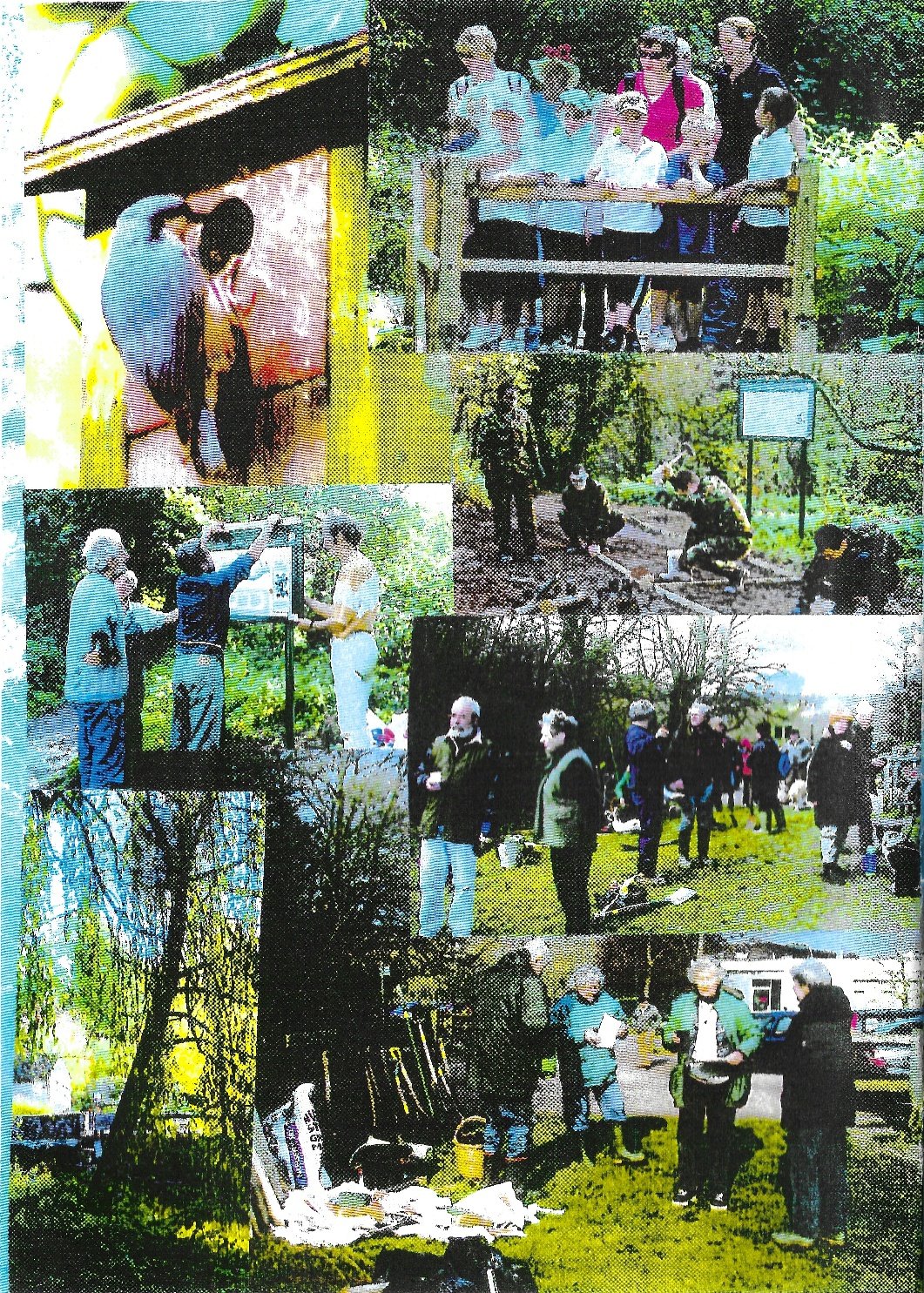
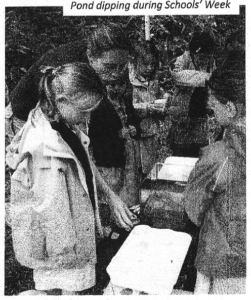
Schools' Week has become an annual event when we invite local primary schools to the Mead to study the flora and fauna and to take part in exciting activities which they all enjoy. Pond and river dipping, bug hunting, flower and leaf identification and learning about the fish in the river are the activities that the children most enjoy. Competitions set at the end of each visit are always well taken up, often with 100% of entries.Also very popular are the Bat and Moth evenings which often feature as part of the Malmesbury Carnival Programme. Tours of the mead for local groups, Scouts, Guides Cubs and adult groups can also be arranged on request.
I cannot conclude this article without mention of our volunteers, past and present. In her account Lesley recalls the very first group of trustees. Just a few of us remain: Lesley, Paul, Peter Howell and myself. Some have moved on for various reasons, new jobs further afield, new commitments, even emigration. Others have sadly died and we mourn their loss and remember the important part they played and their devotion to and work for the Trust.
'Paddy' Lockstone will be remembered not only for his fund-raising Model Railways exhibitions in the Town Hall, bringing devotees from far and wide. Paddy was a real watchdog on the committee, keeping an eagle eye open for any planning applications or other matters that posed a threat to our river valleys.
The contribution made by Peter and Betsy Little to all aspects of our work and continued success as an organisation, their friendship, knowledge and dedication was limitless. They gave us the land at Wynyard which is now our second nature reserve and known as The Wynyard Plantation. It is there we have erected a set in their memory, in a spot of peace and serenity for quiet meditation.
Over the years other Trustees and Committee Members have come and gone as other commitments have intervened, but we still have a dedicated team of Trustees and committee members, numbering fifteen in all, to carry us into the future.
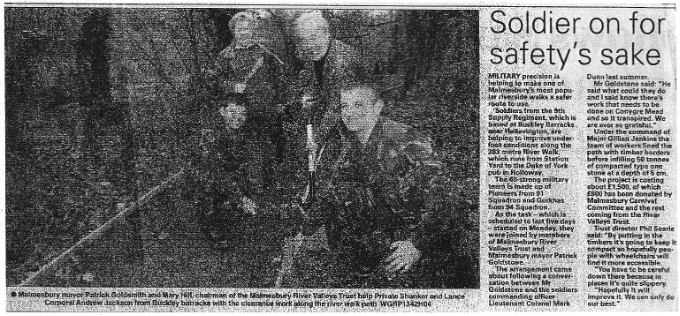
Here I must pay tribute to all those willing volunteers who turn out regularly on the first Sunday of each month to carry out routine maintenance on both sites. This includes all forms of maintenance, clearing brambles, pollarding and coppicing willows and hazels, mending riverbanks and litter clearing to name but a few of the tasks.
If you can join us - first Sunday of each month at 10:00 am we would be delighted to welcome you.